
How Cold-Chain Transport Protects Sensitive Medications
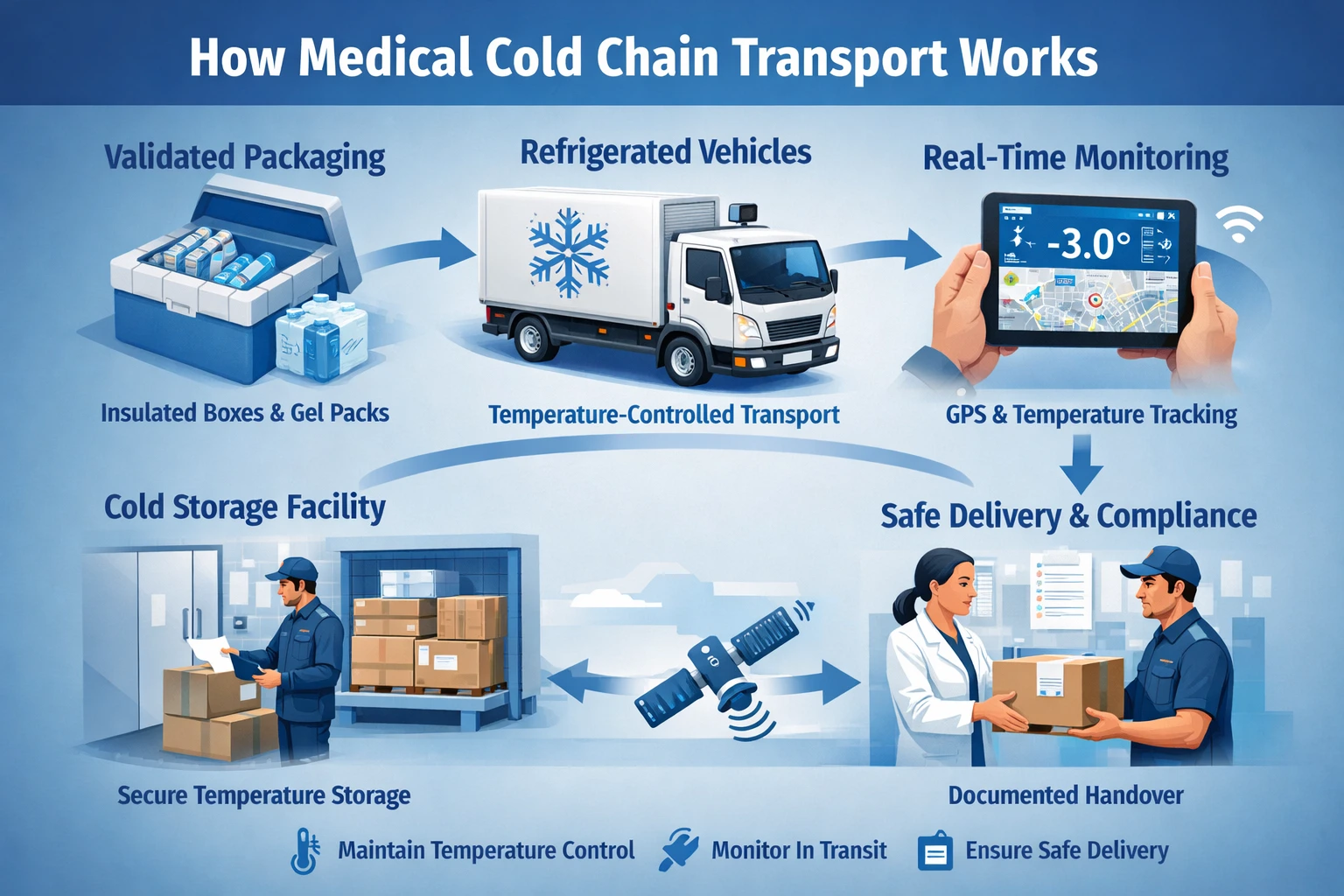
The term “cold chain” represents the continuous nature of this process. Maintaining the required temperature is necessary at every stage, from the point of origin to the final destination. Specialized cooling and temperature-control technologies are used to maintain consistent conditions throughout shipping and storage.
Before understanding how cold chain logistics protects medicine while transportation, let's go through more about cold chain logistics.
What Is Cold-Chain Logistics?
Cold chain logistics is a temperature-controlled segment of supply chain management that involves the handling, storage, transportation, and monitoring of temperature-sensitive products from their origin to their final destination.
Cold chain logistics is primarily designed for products that can be damaged, spoiled, or become unsafe when exposed to unsuitable temperatures. These include perishable goods, anticancer medicines, vaccines, chemicals, and other temperature-sensitive materials.
Key Components of Cold Chain Logistics
A reliable cold chain is built from several connected elements that work together to protect products from temperature-related damage. The system combines refrigeration infrastructure, controlled storage, thermal packaging, specialized transportation, monitoring technology, and appropriate handling procedures. Each component has a different role, but a weakness in one area can affect the performance of the entire chain.
1. Refrigeration and Cooling Equipment
Refrigeration equipment creates and maintains the environmental conditions required for temperature-sensitive products. Depending on the application, this may involve chillers, freezers, cold rooms, blast-freezing equipment, or refrigeration units installed in transport vehicles.
These systems need to provide stable cooling rather than simply lowering the temperature. Insulation, airflow, humidity management, and temperature controls can also be used to maintain suitable conditions for different products.
2. Temperature-Controlled Storage
Cold storage facilities provide a controlled environment when products are held before, between, or after transportation stages. They can include refrigerated warehouses, cold rooms, freezers, and humidity-controlled areas.
Modern facilities may combine refrigeration equipment with insulation, airflow controls, backup systems, and continuous temperature monitoring. This helps protect inventory while it moves through the different stages of the supply chain.
3. Thermal Packaging Solutions
Packaging provides an additional layer of protection when products are exposed to changing external conditions during transportation or handling. Its purpose is to help keep the product within its required temperature range for the expected duration of the shipment.
Depending on the product and journey, solutions may include:
- Insulated containers and pouches
- Gel packs
- Dry ice
- Water blankets
- Phase change materials (PCM)
- Reflective bubble mailers
- Thermal or vacuum-insulated materials
The appropriate packaging depends on factors such as the product's temperature requirements, transit duration, shipment size, and surrounding conditions.
4. Refrigerated Transportation
Temperature-controlled vehicles and containers carry products between production sites, warehouses, distribution centers, and final destinations. Common options include refrigerated trucks, vans, railcars, reefer containers, refrigerated ships, and temperature-controlled air freight.
Some shipments may use insulated containers with their own cooling systems. Transportation operations can also incorporate a Transportation Management System (TMS) to help coordinate routes and shipments, while GPS technology provides location visibility.
5. Temperature Monitoring and Tracking
Monitoring technology provides visibility into the conditions experienced by products during storage and transit. IoT sensors, temperature data loggers, GPS devices, and cloud-based monitoring platforms can record environmental and location information.
When a reading moves beyond a predefined limit, automated systems can generate an alert so that corrective action can be taken. Continuous monitoring is particularly useful for identifying temperature excursions before they result in significant product loss.
6. Handling and Distribution Controls
Maintaining the required temperature does not stop when a vehicle reaches a warehouse or distribution point. Products can also be exposed to temperature changes during loading, unloading, transfers, sorting, processing, and last-mile distribution.
For this reason, cold chain operations require suitable handling procedures and qualified equipment at transfer points. Staff should also receive appropriate training covering product handling, documentation, traceability, and responses to temperature-related incidents.
Quality-control programs may use HACCP (Hazard Analysis and Critical Control Points) to identify and manage potential hazards, alongside routine inspections and audits.
7. Data Logging, Traceability, and Compliance
Cold chain management also depends on reliable records showing what happened to a shipment throughout its journey. Digital systems can capture information such as temperature readings, location, handling events, and deviations.
This creates an end-to-end record that can support traceability, quality investigations, regulatory inspections, and compliance documentation.
Depending on the industry and type of shipment, organizations may work with frameworks and standards such as ISO 9001, HACCP, Good Distribution Practices (GDP), IATA requirements, and ATP requirements.
8. Why Is Cold-Chain Logistics Critical for Pharmaceuticals?
- Quality and Safety Assurance
- Waste Reduction
- Compliance
How Does Cold-Chain Monitoring Work?
Cold-chain monitoring works by continuously measuring and recording the conditions surrounding temperature-sensitive products during storage, transportation, and handling. Sensors are placed inside refrigerated trucks, containers, warehouses, cold rooms, processing facilities, and other controlled environments to capture temperature.
Step-by-Step Process
1. Sensors Collect Temperature and Environmental Data
Temperature and IoT sensors sit at critical points in storage and transport. They monitor temperature, humidity and other conditions, and record readings automatically at set intervals instead of relying on manual checks. For shipments, devices travel with the cargo, and multiple sensors in a truck or container catch variations.
2. Gateways Transmit the Data
Sensors send readings to a gateway, which passes them to a central software platform. Wireless systems transmit continuously or at set intervals, so staff don’t need to log each reading by hand.
3. Cloud Software Stores and Analyzes the Data
The platform keeps a time-stamped record of the conditions the product experienced. It shows live readings, tracks trends, and compares measurements against temperature limits and regulatory thresholds. The records also support compliance checks, inspections, complaints and incident investigations.
4. Alerts Flag Temperature Excursions
When a reading goes out of range, the system sends an alert by SMS, email, voice call or app. Alerts can escalate to backup staff if no one acknowledges them. Teams can fix the problem while it is happening, such as closing a vehicle door or checking a refrigeration failure.
5. Calibration Keeps Sensors Accurate
Calibration checks a sensor against a traceable reference standard. It should be done at defined intervals and recorded, especially in regulated industries. An uncalibrated sensor can show a safe temperature when the product is actually out of range.
6. Continuous Monitoring Creates a Complete Record
Manual checks capture only moments in time, while continuous monitoring covers the whole storage or shipment period. The data helps you:
- Identify temperature excursions
- Track temperature and humidity trends
- Verify products stayed within required conditions
- Investigate incidents
- Demonstrate compliance and maintain traceability
The full chain: Sensors → Gateway → Cloud Platform → Data Analysis → Alerts → Corrective Action → Digital Record
This approach gives cold-chain operators both real-time visibility for immediate intervention and historical data for compliance, traceability, and investigation.
What Tools Are Used for Monitoring the Cold Chain?
Cold-chain monitoring uses a combination of sensors, data loggers, IoT devices, gateways, cloud platforms, GPS trackers, and alert systems to track temperature and other environmental conditions. The tools used depend on the type of product, transportation method, required temperature range, and level of monitoring needed.
1. Temperature Sensors
Temperature sensors are the basic monitoring devices used to measure conditions inside refrigerated vehicles, containers, warehouses, cold rooms, freezers, and other controlled environments. They can provide continuous readings or measurements at predefined intervals.
2. Data Loggers
Data loggers record temperature readings over a period of time and create a historical record of the conditions experienced by a shipment or stored product. They are particularly useful when companies need to review temperature history after transportation or storage.
Some advanced data loggers can also measure humidity and other environmental conditions.
3. IoT Monitoring Devices
Internet of Things (IoT) devices connect sensors to digital monitoring systems, allowing temperature and environmental data to be transmitted automatically. IoT trackers can be attached to shipments or placed at different locations inside refrigerated trucks and containers.
This enables operators to monitor conditions remotely rather than relying entirely on manual inspections.
4. Gateways
Gateways act as a communication link between monitoring sensors and the central software platform. They collect information from connected sensors and transmit it through available communication networks.
This is especially useful when multiple sensors are being used across a warehouse, vehicle, or shipping container.
5. Cloud-Based Monitoring Platforms
Cloud platforms collect and store monitoring data from connected devices. They can display current temperature readings, historical trends, location information, and environmental conditions through dashboards accessible from computers or mobile devices.
These platforms can also compare readings with predefined limits and help generate reports for quality control and compliance purposes.
6. GPS Tracking Devices
GPS trackers provide information about the location and movement of temperature-sensitive shipments. When GPS data is combined with temperature monitoring, logistics teams can determine not only whether a temperature excursion occurred but also where and during which stage of transportation it happened.
7. Real-Time Alert Systems
Alert systems notify responsible personnel when monitored conditions move outside defined limits. Depending on the monitoring platform, alerts may be delivered through SMS, email, phone calls, mobile applications, or dashboard notifications.
These alerts allow teams to investigate problems quickly and take corrective action before product quality is affected.
8. Calibration Equipment
Calibration equipment and reference standards are used to verify whether temperature sensors and monitoring devices are providing accurate readings. Regular calibration helps maintain confidence in monitoring data and supports documentation requirements in regulated cold-chain operations.
9. Digital Data Logging and Reporting Software
Monitoring software can transform collected readings into reports, temperature histories, compliance records, and audit documentation. These records can help organizations investigate temperature excursions, demonstrate compliance, and maintain product traceability.
Also Read: Oncology Exporter from India to Other Countries
What Are the Key Challenges in Cold-Chain Logistics?
Cold chain logistics is more complex than conventional supply chain management because products must remain within specific environmental conditions throughout storage, handling, and transportation. A temperature deviation, equipment failure, delivery delay, or documentation error can affect product quality, safety, shelf life, and regulatory compliance.
1. Maintaining Consistent Temperature
Maintaining the required temperature from origin to destination is one of the biggest challenges in cold chain operations. Products such as fresh produce, dairy products, vaccines, biologics, pharmaceuticals, and other temperature-sensitive goods may require narrow temperature ranges.
Temperature deviations can occur because of:
- Refrigeration failures
- Inadequate pre-cooling
- Prolonged loading or unloading
- Transportation and customs delays
- Errors during handling
Depending on the product, the consequences may include spoilage, reduced shelf life, changes in product properties, loss of nutritional value, or reduced pharmaceutical efficacy.
Continuous temperature monitoring, validated packaging, reliable refrigeration, backup power, and automated alerts can help identify and manage temperature excursions.
2. Equipment Failure and Power Interruptions
Cold chain facilities depend heavily on refrigeration and temperature-control equipment. Common problems include:
- Cooling-unit failures and coolant problems
- Poor air circulation
- Damaged freezer or cooler doors
- Power outages and electricity fluctuations
For example, a damaged cold-room door may allow warm air to enter, while a failed refrigeration unit can cause temperatures to rise. These problems can lead to product losses if they are not identified and corrected quickly.
Preventive maintenance, backup power systems, equipment monitoring, and contingency plans can reduce the impact of unexpected breakdowns.
3. Excessive Heat Exposure During Loading and Unloading
Temperature-sensitive products can be exposed to unsuitable temperatures before transportation begins or after the vehicle arrives at a facility. Loading, unloading, receiving, and transfer points can create periods when products are outside their controlled environment.
Prolonged exposure to external heat can compromise temperature-sensitive food, anticancer medicines, and other products.
The following measures can help reduce this risk:
- Efficient loading and unloading procedures
- Insulated loading and transfer areas
- Suitable temperature-controlled packaging
- Controlled product transfer processes
- Minimizing the time that doors remain open
4. Time-Sensitive Transportation and Delays
Cold chain products often have limited tolerance for delays because they depend on controlled temperature conditions and, in many cases, have relatively short shelf lives.
Common causes of transportation delays include:
- Extended transit times
- Customs clearance delays
- Inefficient route planning
- Missed delivery windows
These delays can increase the time products spend in transit and expose them to additional risks.
Route optimization, accurate delivery planning, real-time shipment visibility, and rapid incident response can help reduce unnecessary transit time.
5. Limited Visibility and Real-Time Tracking
Without continuous visibility, logistics teams may not know that a shipment has experienced a temperature spike, refrigeration failure, route delay, or other problem until the product reaches its destination.
Modern cold chain systems can combine the following technologies to provide real-time shipment information:
- IoT sensors
- GPS tracking
- Telematics
- Cloud platforms
- Automated alerts
These systems can monitor temperature, humidity, location, and shipment status. This allows operators to identify problems earlier and take corrective action instead of discovering them after the cargo has already been compromised.
6. Infrastructure Limitations
Effective cold chain operations require suitable infrastructure, including:
- Cold storage facilities
- Reliable electricity
- Refrigerated transportation
- Temperature-monitoring systems
- Supporting transport infrastructure
In regions where specialized storage facilities are limited or power supplies are unreliable, maintaining consistent conditions can become significantly more difficult. Poorly maintained roads and transportation networks can also increase transit times and the risk of temperature excursions.
These infrastructure limitations can result in higher operating costs, longer lead times, and increased product spoilage.
7. Human Error and Handling Problems
Technology cannot eliminate every risk in a cold chain. Mistakes during packing, loading, unloading, storage, transportation, documentation, or temperature monitoring can compromise product integrity.
Common examples include:
- Incorrect product handling
- Leaving refrigerated doors open
- Improper placement of products
- Incomplete or inaccurate paperwork
- Failure to respond to temperature alerts
Proper employee training, standardized operating procedures, clear documentation, and regular quality checks can reduce these risks.
8. Regulatory Compliance and Documentation
Temperature-sensitive industries, particularly pharmaceuticals, healthcare, and food, operate under strict quality and safety requirements. Companies may need to demonstrate that products were stored, transported, and handled under appropriate conditions.
Compliance requirements can cover:
- Temperature records
- Packaging and hygiene
- Vehicle maintenance
- Storage conditions
- Product traceability
- Audits and reporting
Depending on the industry, standards such as Good Distribution Practice (GDP), Good Manufacturing Practices (GMP), and HACCP may apply.
Poor documentation or non-compliance can result in product rejection, recalls, financial penalties, legal consequences, or damage to business reputation.
9. Coordination Between Multiple Stakeholders
A cold chain can involve manufacturers, suppliers, freight forwarders, carriers, warehouse operators, customs authorities, distributors, and retailers. Each party has a role in maintaining product conditions.
Poor communication between stakeholders can result in:
- Delivery delays
- Incorrect temperature requirements
- Missed handovers
- Incomplete documentation
- Delayed responses to incidents
Shared data, clearly defined responsibilities, integrated logistics systems, and effective communication can help maintain consistency from the first stage to final delivery.
10. High Operating and Infrastructure Costs
Cold chain operations generally require more investment than conventional logistics. Businesses may need to pay for:
- Refrigerated vehicles
- Temperature-controlled warehouses
- Specialized packaging
- Temperature-monitoring devices
- Energy and equipment maintenance
- Trained personnel
- Backup systems
Energy consumption and maintenance can add significantly to operating expenses. Businesses may also incur additional costs when using specialized third-party logistics providers.
Therefore, companies need to balance temperature-control requirements with operational efficiency while ensuring that cost reductions do not compromise product safety or quality.
11. Condensation and Microbial Growth
Moisture and temperature changes can create additional problems in cold storage environments. Condensation may occur when products or surfaces move between different temperature conditions, potentially creating slippery working surfaces and affecting product hygiene.
Common risks include:
- Condensation on products and storage surfaces
- Poor airflow and humidity management
- Mold or microbial growth
- Spills and damaged storage areas
- Inadequate sanitation
Regular cleaning, appropriate airflow and humidity management, equipment maintenance, and proper sanitation procedures help control these risks.
12. Damaged Goods and Shipments
Products can be damaged through improper handling, poor placement inside vehicles, packaging failures, physical impacts, or exposure to unsuitable temperatures during transportation.
Damaged shipments can lead to additional costs through:
- Product rejection
- Replacement expenses
- Product spoilage
- Customer complaints
- Lost revenue
Tracking technologies such as RFID, combined with proper packaging and handling procedures, can improve shipment visibility and help identify problems during transit.
How Can Cold-Chain Monitoring Be Improved?
Invest in Real-Time Visibility
- IoT Temperature Monitoring Devices
- Cloud-Based Software
- Alerts and Notifications
Use Data to Make Better Decisions
- Data Analytics and Reporting
- Predictive Analytics
- Continuous Improvement
- Collaboration and Knowledge Sharing
Conclusion
Maintaining the right temperature throughout storage and transportation is essential for preserving medicine quality and safety. Malambi Health Care uses temperature-monitoring tools such as data loggers to help track conditions during pharmaceutical shipments. With a focus on Critical Care and specialty medicine, we support the supply needs of healthcare partners across international markets.
Contact Malambi Health Care today to discuss your pharmaceutical export requirements and find suitable supply solutions for your business.
FAQs
It maintains required temperatures during medicine storage and transportation to preserve quality and effectiveness.
Using temperature sensors, data loggers, and automated alerts.
Pharma cold chains protect medicine quality, while food cold chains preserve freshness and safety.
It checks how a medicine's quality changes over time under specific conditions.